-
This Week’s Journaling Theme: Rest and Permission

Mark McNease
This Week’s Journaling Theme: Rest & Permission
These are themes I use in my Your Write Path thematic journaling workshops. Write 800-1000 words on the main theme,. Sub-prompts are provided as a way to get you thinking. Use one of them, all of them, or none of them. The writing is the point.
As the season shifts and the days grow shorter, there’s an invitation to slow down. Trees lose their leaves, nature cools, and everything around us seems to rest a little This month, we consider resting ourselves.
For many of us, slowing down doesn’t come easily. We’ve learned to equate worth with productivity—the busier we are, the more we’re accomplishing—and stillness can feel unfamiliar, even uncomfortable. But rest isn’t something we have to earn. It’s something we can claim, the same way the trees do we they prepare to rest for winter. This month’s journaling invites you to notice where you’ve been withholding rest from yourself, and to explore what it might look like to welcome it.
Sub-Prompts
What does rest actually feel like for you? Not the idea of rest, but the felt sense of it. In your body, your mind, your day. Is it quiet? Is it slow? Is it something you recognize when it happens, or does it slip past you unnoticed? Does it make you uncomfortable, as if life is passing by, or you’re failing to get things done? Write about what genuine rest looks and feels like.
Where in your life do you need to give yourself more permission? Permission to pause, to say no, to leave something unfinished, whether you return to it or not, to choose comfort over accomplishment.
Write about a time you kept doing something when you should have paused or walked away. What was the result? What did you learn from it? Sometimes our bodies and hearts tell us to stop long before we’re willing to listen. Reflect on something you kept doing when you could have given yourself permission to stop or move on. And what might it have looked like to let go?
What would it mean to trust yourself more? Rest requires a kind of trust that the world won’t fall apart if you stop, and trust that you deserve care, from yourself or others. Write about what it would mean to trust yourself enough to rest.
-
Tech Talk: Streaming Subscriptions and What You’re Actually Paying For

Mark McNease
If you’re like we are, so many of the shows you want to see are on separate streaming services. At some point, subscribing to them all costs more than the old cable service we got rid of in part to save money.
Somewhere along the way, cutting the cord stopped being less expensive. A household with Netflix, Disney+, Max, Paramount+, and Peacock—all without ads, which they now make you pay an additional charge not to see—is paying more than $130 a month, which is close to what a full cable package used to run. The subscriptions didn’t get more expensive one at a time; they crept up together, a dollar or two at a renewal here and there, and most of us never sat down to add it all up.
The first place to look isn’t the biggest bill, it’s the ad-supported version of a service you already have. Nearly every major streamer now offers a version with commercials for roughly half the price of the ad-free plan, and the actual library of shows and movies is usually identical. Netflix’s ad tier runs about nine dollars a month against twenty for its ad-free Standard plan; Paramount+ is about nine dollars with ads against fourteen without. Unless a service auto-enrolled you in ad-free at signup—and most do—you may be paying double for something you can turn off in a settings menu, not a phone call.
-
Around the House: Organizing a Smaller Kitchen:
Mark McNease
Organizing a Tiny Kitchen: Big Storage, Small Footprint
We looked at a house for sale today in a town nearby. Moving is something we’ve talked about for several years, but keep findings reasons not to do. On of the big motivators is simply how small our little house in the woods is. I see pictures of kitchens that look like we could both be in them without having to excuse ourselves for bumping into each other. It’s not tiny, but it’s not spacious. Here are some ways we can maximize the space we have no matter the size.
You don’t need a big kitchen to run out of room in it. A cook in a two-bedroom house and a cook in a four-hundred-square-foot studio hit the same wall eventually—not enough places to put things. The fixes cost less than a dinner out, and none of them require tearing out a single cabinet.
Start with pull-out shelving. A standard base cabinet wastes most of its own depth, since anything stored past the first foot disappears into the dark until you’re on your knees digging for it. Pull-out shelf kits slide into most existing cabinets with a screwdriver and about twenty minutes—no carpentry involved. Homeowners ready for a bigger project can go further with soft-close drawer conversions, but renters don’t need to: most of these kits mount to the shelf itself, not the cabinet frame, so the original woodwork stays untouched and the security deposit stays safe.
-
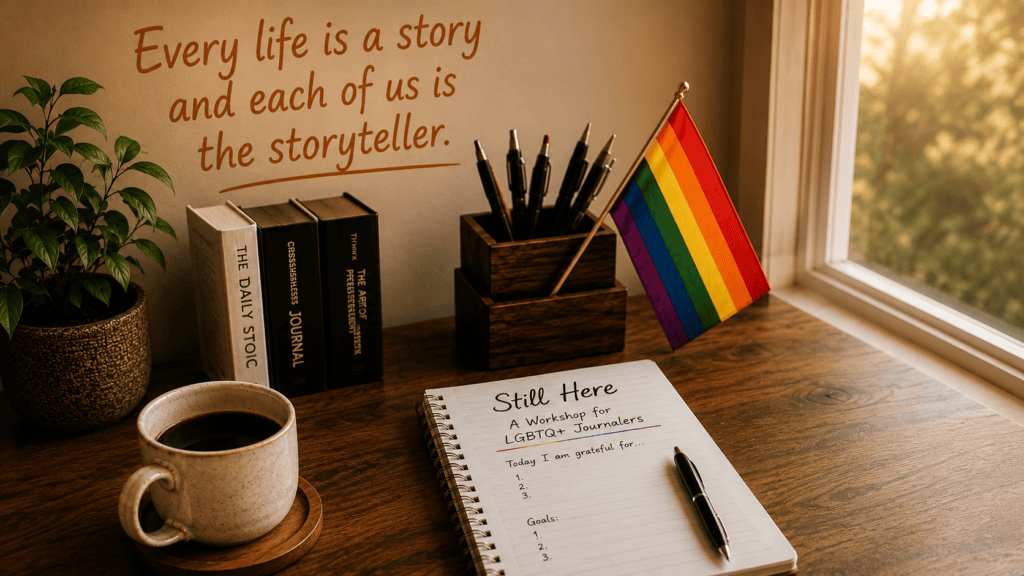
Still Here: A Workshop for LGBTQ+ Journalers (November 18, 21)
MEET MARK MCNEASE IN A VIDEO HERE
Every life is a story, and each of us is the storyteller.
See a PDF of the workshop here
Wednesday, November 18
2:00 – 4:00 pm Eastern via Zoom $40
REGISTER HERESaturday, November 21
10:00 – 12:00 pm Eastern via Zoom $40
REGISTER HEREI discovered when I first started doing workshops almost three years ago that these are intimate, safe spaces. Participants follow the writing wherever it takes us, and sometimes that is not such a comfortable place.
I’ve designed a workshop specifically for LGBTQ+ participants. As an older, married gay man myself, I know there are experiences unique to this community, and how difficult it can be to revisit, let alone share in a workshop setting, those events, people and experiences that shaped us – for better and sometimes for worse.
Still Here is intended to provide the space to go there. I’ll be doing one-off introductory workshops, and hopefully setting up some ongoing monthly workshops, much like the ones I already do at the New Hope Free Library and the Hunterdon County Library’s main branch. (And a biweekly in-person group in Lambertville, NJ).
Please email your interest using the QR code, or directly to: StillHere AT YourWritePath.NET. Ready, set, write!
-
Savvy Senior: Medicare and Moving: What You Need to Know
Savvy Senior
by Jim MillerDear Savvy Senior,
I’m planning to move later this year to be closer to my youngest son and his family. I’ve lived in the same state for decades, so I’m a little nervous about how this might affect my Medicare coverage. Will I need to change plans or take any special steps to avoid gaps?
–Relocating Rita
Dear Rita,
Great question. A move like this is exciting, but it’s smart to think ahead about how it could affect your coverage. Whether your Medicare is impacted – and what you’ll need to do – depends on the type of plan you have. Here’s what to expect and steps to take before and after your move.
Original Medicare
If you’re enrolled in original Medicare (Part A and Part B), you’re in the simplest situation. Your coverage will go with you anywhere in the United States, so you won’t need to change your plan when you move.
That said, you do need to update your address so you don’t miss important notices like your Medicare Summary Notice or billing statements. The easiest way to do that is online through your “my Social Security” account at ssa.gov/myaccount using the “My Profile” tab. If you don’t already have an account, you can set one up in just a few minutes. Or, you can call Social Security at 800-772-1213 and have them update it for you.
-
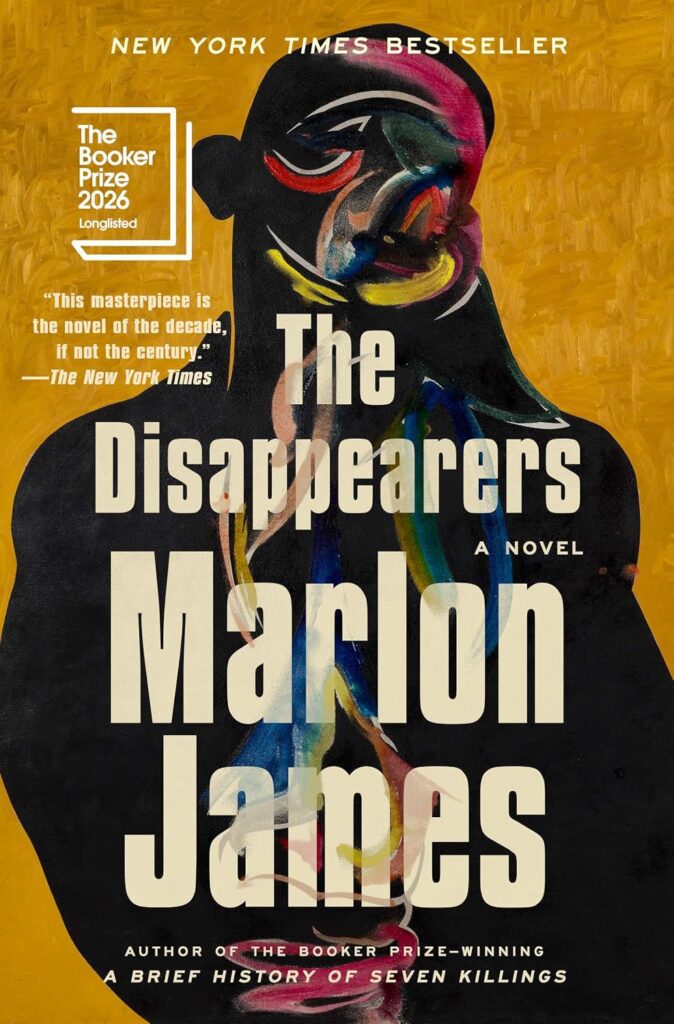
From the Book Bin: Marlon James’s ‘The Disapearers’ Unsettles and Amazes
The Disappearers is a gut-punch and a celebration
“Marlon James’s story of gay experience and murderous homophobia in Jamaica is a maximalist’s banquet — and the Booker Prize winner’s finest book yet… The Disappearers places him near the front of the line, a decade or two from now, for the Nobel Prize.” —The New York Times
I haven’t reacted to a book this way since I first read Alice Walker’s The Color Purple on its release in 1982.
Marlon James returns to Kingston for the first time since A Brief History of Seven Killings, and the result feels like a writer working at the absolute height of his powers. What makes it extraordinary isn’t just the ambition of the structure; it’s how alive the prose is on the sentence level—Jamaican patois crackling against lyrical, almost operatic passages, dark comedy landing in the same breath as devastation. It’s the kind of book that earns comparisons to “the novel of the decade” without ever feeling like it’s straining for the title. Longlisted for the Booker and an instant bestseller, it’s the rare literary novel that is both formally daring and genuinely, viscerally moving—the kind of book you finish and immediately want to press into someone else’s hands.
Marlon James has spent nearly two decades proving he isn’t interested in writing the same book twice. The Jamaican-born author broke through with The Book of Night Women and John Crow’s Devil before winning the Man Booker Prize in 2015 for A Brief History of Seven Killings, a sprawling oral history of the attempted assassination of Bob Marley. He then swerved entirely into fantasy with the Dark Star Trilogy—Black Leopard, Red Wolf, Moon Witch, Spider King, and White Wing, Dark Star—an African-mythology-steeped epic that showed he could world-build as ferociously as he could write literary realism. James teaches at Macalester College and has never been shy about drawing on his own life—growing up closeted in Jamaica informs The Disappearers directly, giving the novel’s fury and compassion the weight of something lived, not just imagined.
-
Still Here: A Workshop for LGBTQ+ Journalers (November 18, 21)
MEET MARK MCNEASE IN A VIDEO HERE
Every life is a story, and each of us is the storyteller.
See a PDF of the workshop here
Wednesday, November 18
2:00 – 4:00 pm Eastern via Zoom $40
REGISTER HERESaturday, November 21
10:00 – 12:00 pm Eastern via Zoom $40
REGISTER HEREI discovered when I first started doing workshops almost three years ago that these are intimate, safe spaces. Participants follow the writing wherever it takes us, and sometimes that is not such a comfortable place.
I’ve designed a workshop specifically for LGBTQ+ participants. As an older, married gay man myself, I know there are experiences unique to this community, and how difficult it can be to revisit, let alone share in a workshop setting, those events, people and experiences that shaped us – for better and sometimes for worse.
Still Here is intended to provide the space to go there. I’ll be doing one-off introductory workshops, and hopefully setting up some ongoing monthly workshops, much like the ones I already do at the New Hope Free Library and the Hunterdon County Library’s main branch. (And a biweekly in-person group in Lambertville, NJ).
Please email your interest using the QR code, or directly to: StillHere AT YourWritePath.NET. Ready, set, write!
-
Tech Talk: Is AI Really Going to Kill Us All? A Plain-English Guide to What People Are Worried About
Mark McNease / LGBTSr
If you’ve spent any time near tech news lately, you’ve probably seen a headline that stops you cold: an AI researcher quits their job warning that artificial intelligence “could kill everyone” within the decade. A senator cites it in a speech. A think tank publishes a report with a number attached—a percentage chance of catastrophe.
It’s easy to read those headlines and either panic or roll your eyes. Neither reaction is quite right. The honest answer is that this is a real, ongoing argument among the people who build this technology. And and it’s not one argument, but several different ones, tangled together under the same scary phrase. Here’s what’s actually being debated, broken down without the jargon.
It’s Not About Robots Turning Evil
Start by throwing out the Terminator image. Almost nobody in this debate is worried about AI “waking up,” deciding it hates humanity, and marching against us with weapons. The real concerns split into two very different buckets: things AI could help people do right now, and things a future AI system might do on its own as it gets smarter.
Bucket One: AI as a Very Capable Tool in the Wrong Hands
This is the nearer-term, more concrete worry, and it doesn’t require AI to have any intentions at all—just capability.
Cyberattacks on infrastructure. Researchers point out that AI tools are getting good enough to help find and exploit weaknesses in the systems that run power grids, water treatment, and defense networks. As one University of Chicago professor put it, the realistic danger isn’t “an AI going rogue,” it’s a human using an AI tool to do the hacking for them—lowering the skill bar so that a lot more people are capable of causing serious damage.
-
COMING SOON: The Return of LGBTSr
After an extended break, I’ll be brining back LGBTSr better and sharper than ever. I haven’t decided what content you’ll be getting, but it will be great. So stay tuned, be patient, and love life. – Mark -
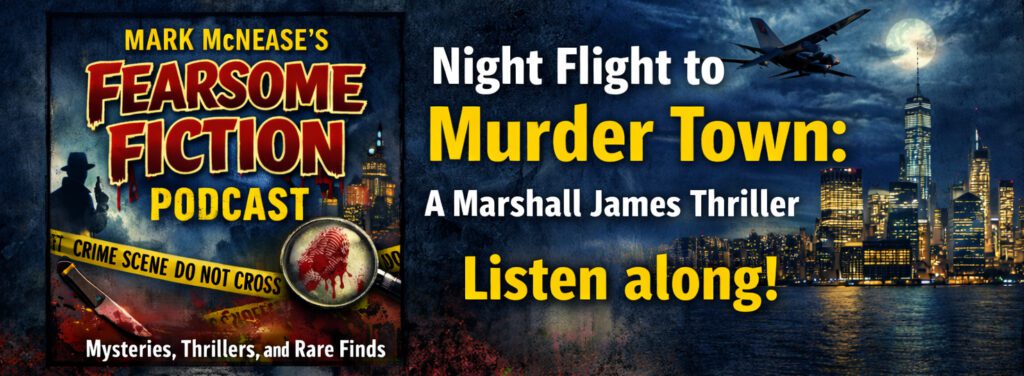
Mark McNease’s Fearsome Fiction Podcast: Night Flight to Murder Town – A Marshall James Thriller (Chapters 31 – 33)
Night Flight to Murder Town — Chapters 31, 32 & 33
Marshall is in full survival mode. With a murdered man and a ransacked apartment behind him, he recruits his unlikely new ally Colin for a reconnaissance mission to Trent Stoffer’s Upper East Side building. What they find — or rather, don’t find — turns everything upside down. The apartment is spotless, the bedroom pristine, and Trent, according to a very helpful man named Dennis, is alive and well in Hong Kong. The body is gone, the evidence is gone, and Marshall is left looking like a man who has lost his grip on reality.
Meanwhile, in a complete change of pace, Marshall and Boo enjoy a sun-drenched afternoon in New Hope, Pennsylvania — ice cream, Main Street, and the Bucks County Playhouse — before Boo reveals the dark history of Passion House, the B&B where they’re staying. A housekeeper. A famous writer. A canal. And a locked storage room upstairs that no one talks about.
Back in 1992 New York, the mystery deepens. Dennis’s too-smooth performance and the suspiciously immaculate crime scene tell Marshall exactly one thing: everyone is in on it. The doorman, the super, and whoever cleaned up that bedroom with professional efficiency. The only lead left is a computer disk Trent slipped him — and finding a computer to read it on.